Knowledge Review
The separate admin Knowledge & Memory page was merged into the unified Knowledge page in the user portal (see Portal User Guide). Review and promotion gate on the apply_knowledge capability, not an admin role: whoever holds the tool sees the review surfaces inside the Knowledge page, whether or not they are an admin.
Inside the Knowledge page, apply_knowledge holders get:
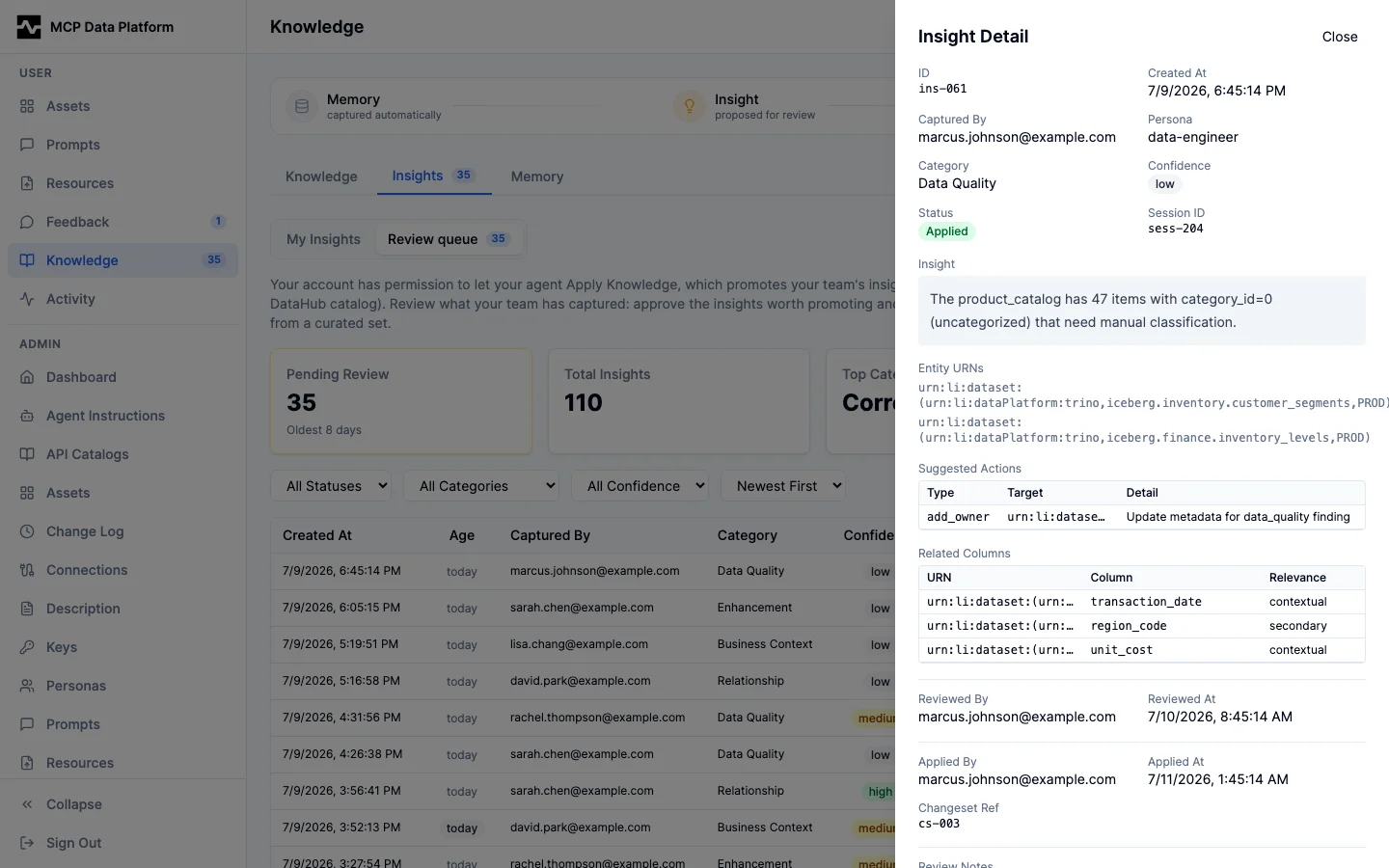
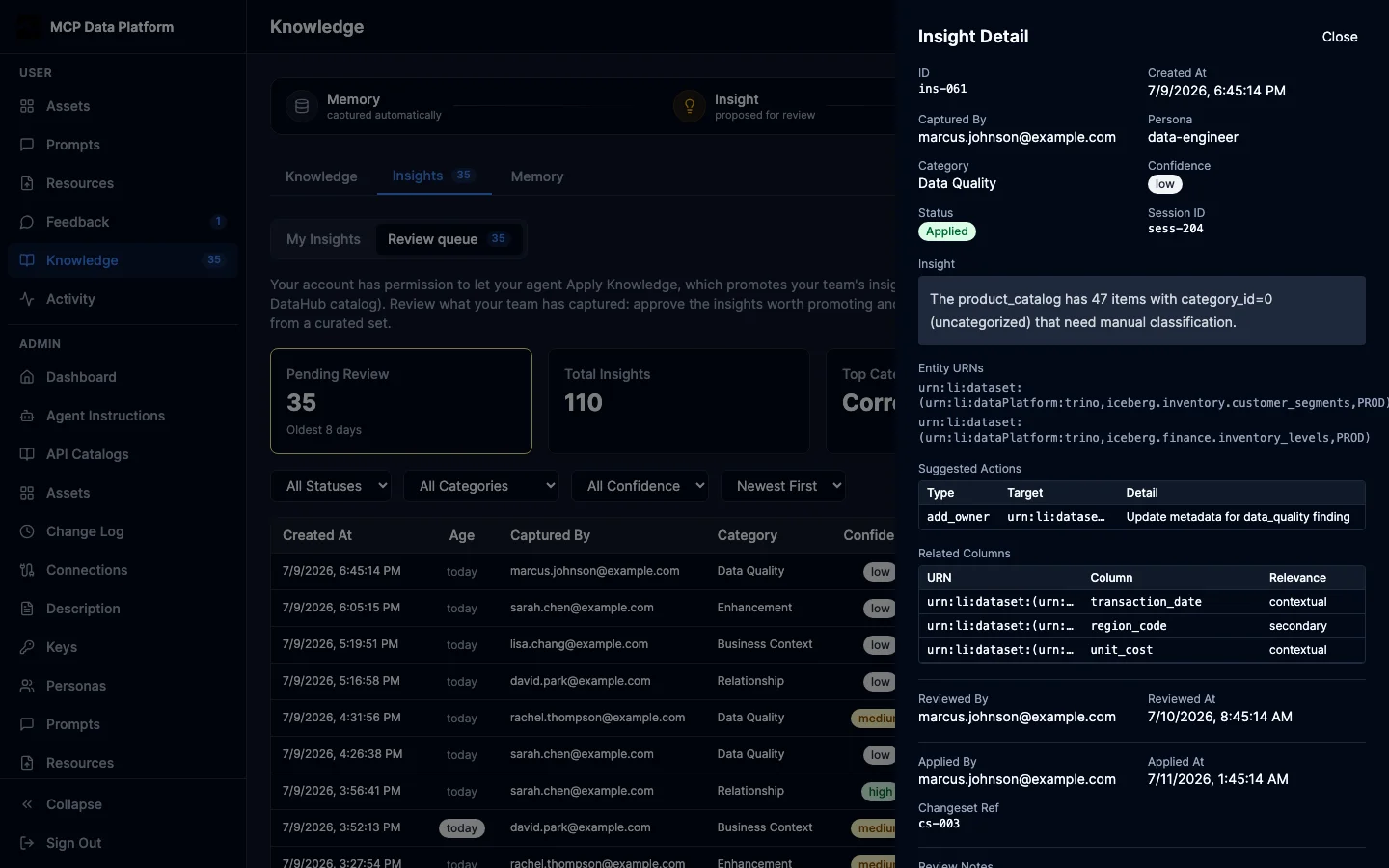
- Review queue (Insights tab) - All captured insights across users, with status/category/confidence filters and an insight detail drawer (full metadata, entity URNs, suggested actions, related columns, review notes, approve/reject actions). A pending-review count is badged on the sidebar Knowledge item and the Insights tab.
- Changesets (Knowledge tab) - The record of insights promoted into knowledge: the target catalog reference or knowledge page, change type, who applied it, and status, with rollback to revert applied changes. They sit with the promoted knowledge rather than with the unpromoted insights in the review pipeline.
Opening an insight from the review queue shows the full review drawer: the captured statement, entity URNs, suggested catalog actions, related columns, the capture/review/apply audit trail, and approve/reject controls.
Observed warehouse state
A claim about an entity the platform can query is one the platform can check for itself. When a pending insight's entity URN resolves through the configured query provider to an available table, the drawer puts that observation under the claim: what the entity is queryable as, which connection it lives on, and how many rows it currently holds.
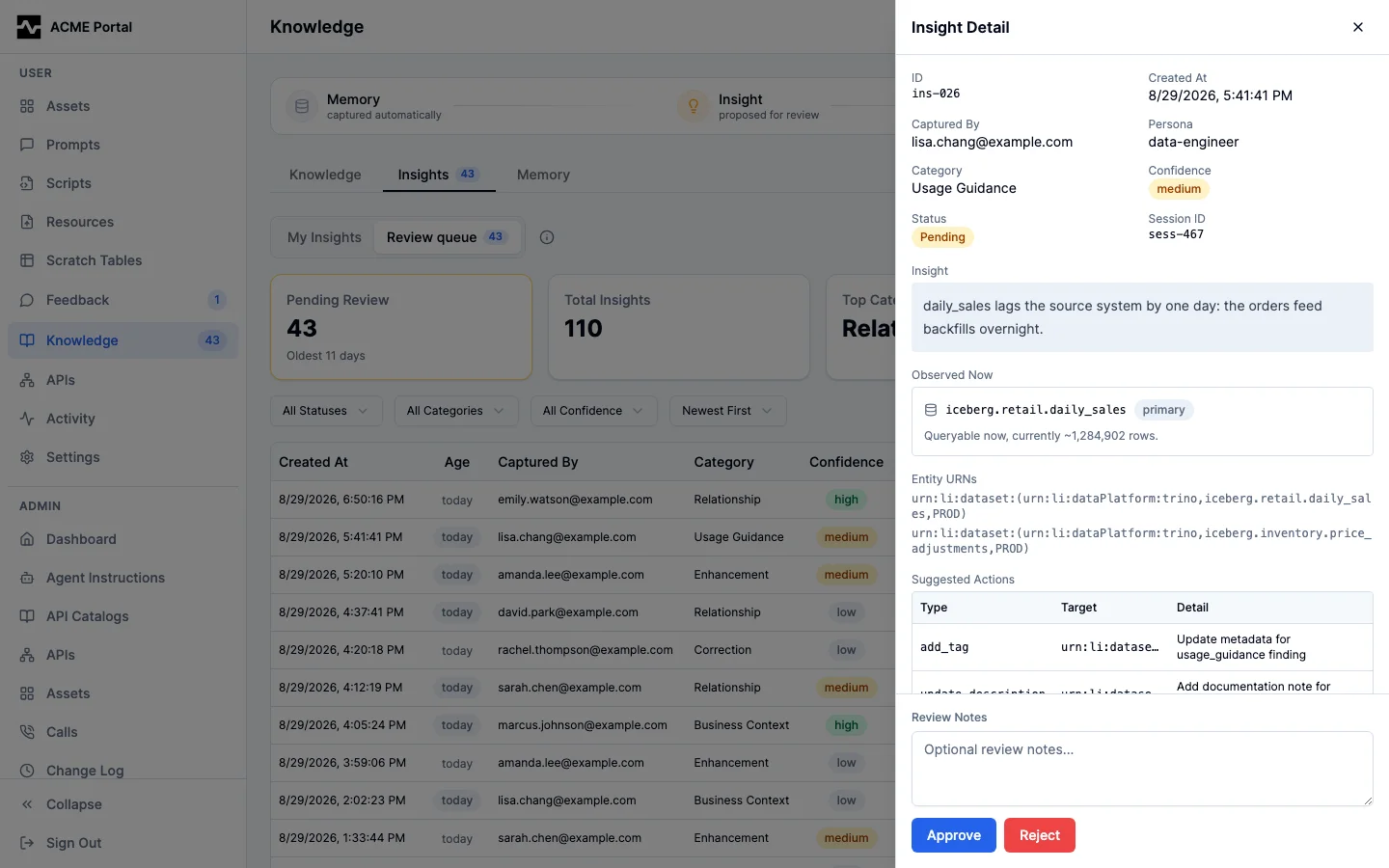
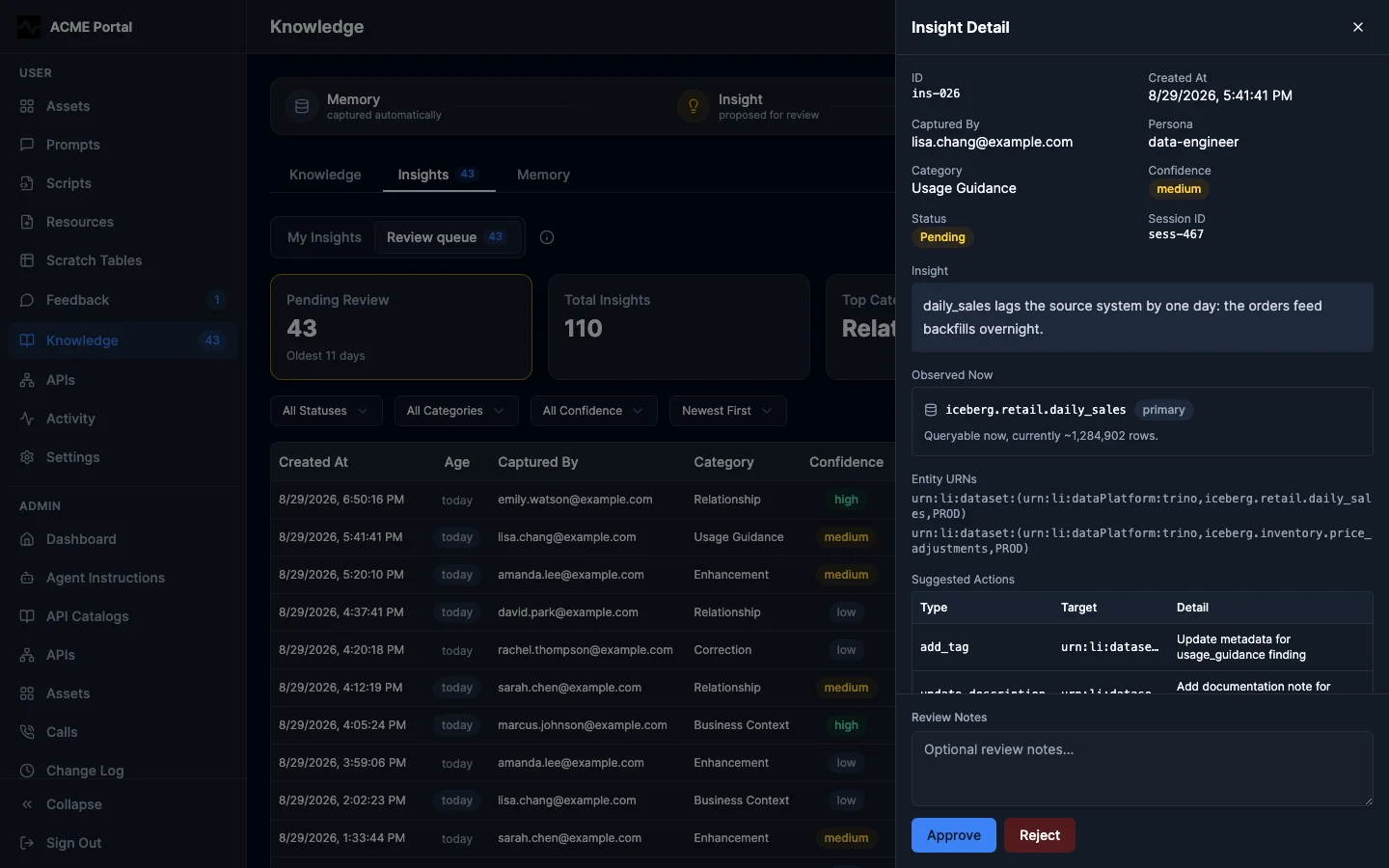
When the claim states a number and the table estimates a different one, the drawer carries an advisory marker naming both. It is advisory only: an estimate is an estimate, the number in the claim may be about something else entirely, and approve and reject stay exactly as available as before. Nothing is ever refused mechanically.
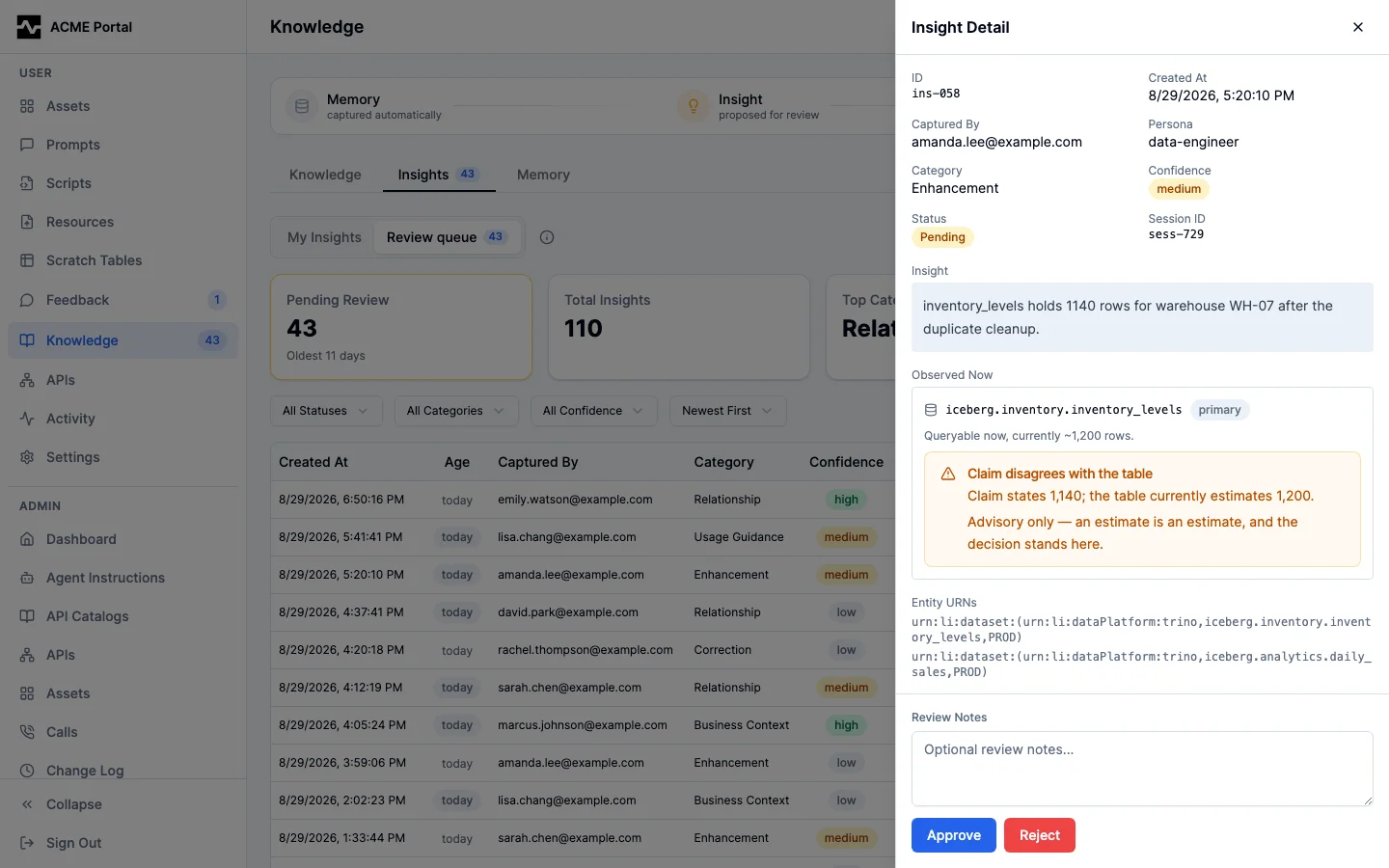
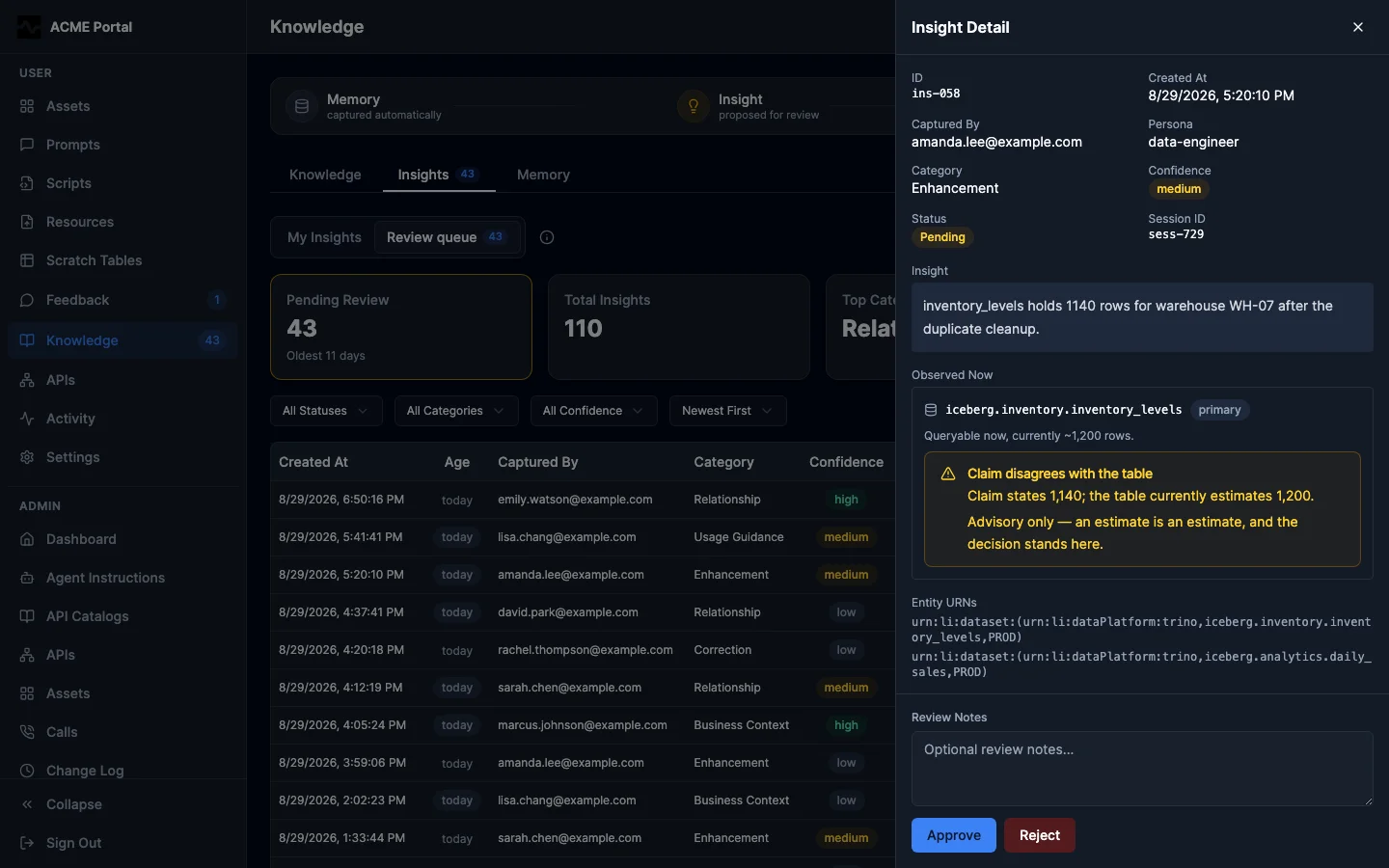
Row estimation is off by default, because COUNT(*) can scan a whole table (enrichment.estimate_row_counts, see Configuration). With it off, the block still states that the entity exists and is queryable, and claims no count on the platform's behalf.
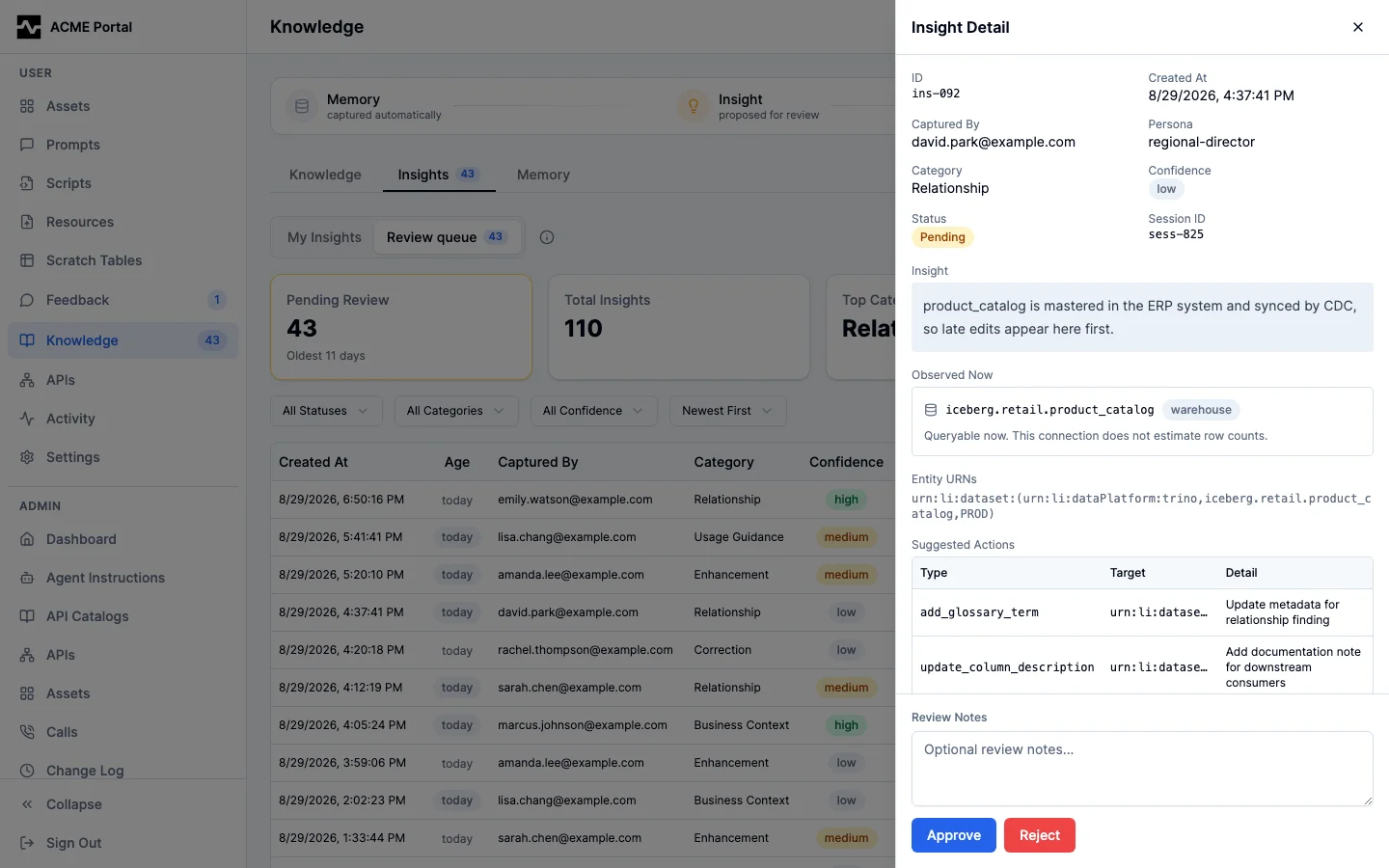
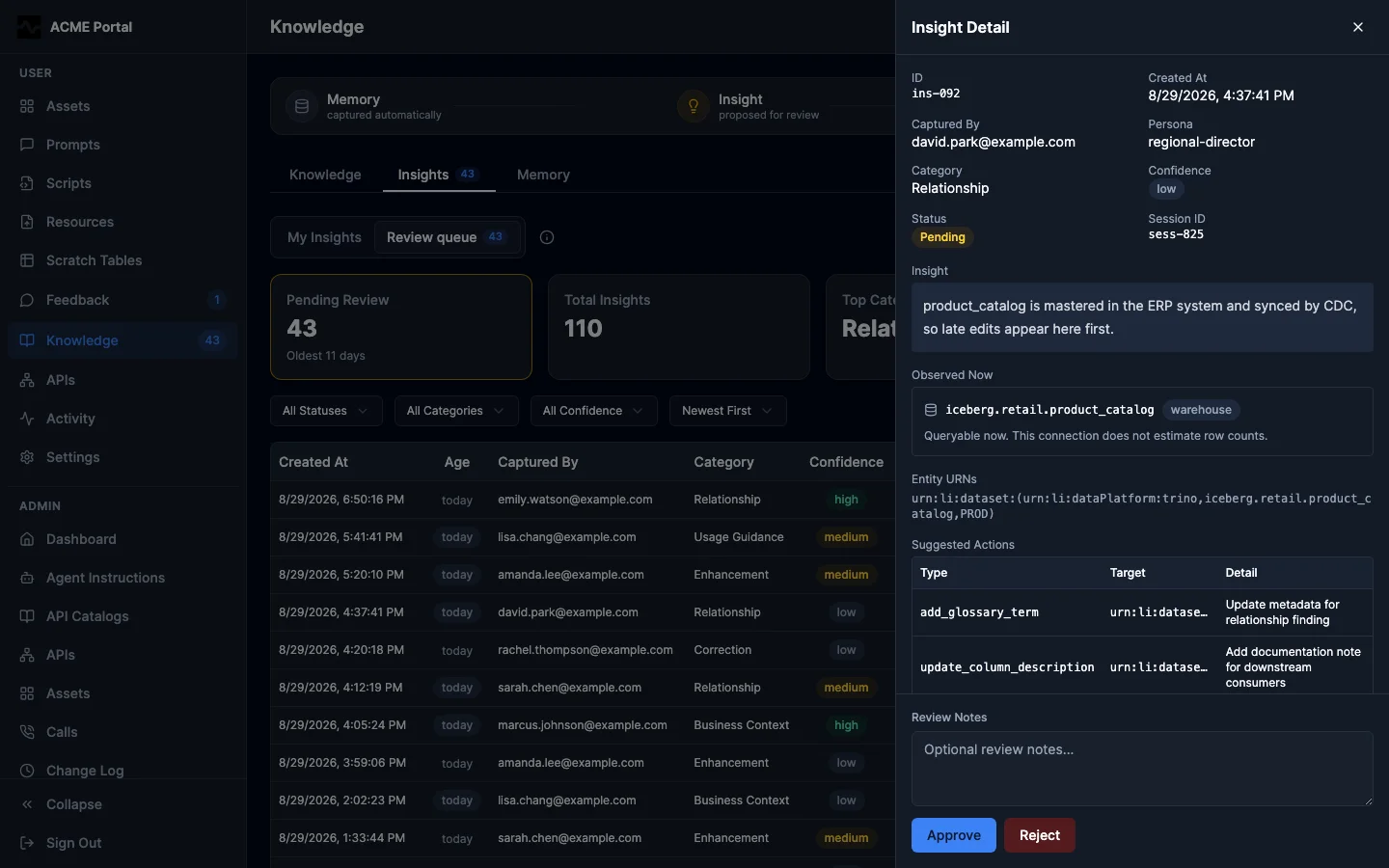
The block is absent, rather than empty, whenever there is nothing to show: a decided insight, an entity URN the provider cannot resolve, a table it reports unavailable, a slow warehouse, and a deployment with no query provider all render the drawer exactly as it was.
The Memory tab is personal to each user; there is no all-user memory view, because the only memory that crosses between users is an insight (handled in the review queue above).